Lactate — the main marker in endurance training
What is lactate Our bodies are built so that everything is interconnected, which is why when one system suffers, the whole training system breaks down. We…
What is lactate
Our bodies are built so that everything is interconnected, which is why when one system suffers, the whole training system is thrown off. We won’t dig into complex processes and the basics of biology right now; instead, we’ll try to explain in simple terms what lactate is and why it’s the main marker in endurance sport.
To fully understand what lactate is, we need to look at our energy systems. Energy systems need fuel to produce energy. One of those fuels is carbohydrates.
The energy system uses glucose (carbohydrates) to produce energy. The end product of this process is lactate! In other words: lactate is the end product of glycolysis.
The less lactate you have during exercise, the higher the % of fat you use as a fuel source; peak fat utilization is observed in the range of 1.3 to 2.5 mmol/L. The higher the lactate, the more carbohydrates you use.
Lactate and fatigue?
One of the biggest myths is that lactate is our enemy and that it causes fatigue, but that’s not the case at all. As exercise intensity rises, athletes start using more carbohydrates as fuel. As a result, more lactate is produced.
This is one of the reasons people have grown used to thinking of lactate as a byproduct that causes fatigue: at high exercise intensities the lactate concentration is high, and athletes get tired. However, there is no cause-and-effect relationship between lactate and fatigue.
Lactate does NOT cause fatigue — it isn’t even a "waste product." It’s FUEL!
We’ve seen that the anaerobic energy system produces lactate. The aerobic energy system uses that lactate as fuel to produce even more energy.
Lactate threshold
The lactate threshold is the highest intensity at which lactate in the muscles and blood can reach a stable concentration, which is why it’s usually called the maximal lactate steady state.
You may also see the term lactate threshold used interchangeably with anaerobic threshold (AnT), LT2, or VT2. However, all of these terms carry slightly different meanings because of the different measurement methods.
The lactate threshold is, as a rule, around 4 mmol on average; on average, you’ll be able to sustain that intensity for roughly 40–130 minutes depending on how much energy is available in the form of carbohydrates.
The lactate threshold is the point at which the rate of lactate production exactly equals the rate of clearance — where any decrease in intensity will cause lactate levels to fall, and any increase in intensity will cause a nonlinear accumulation of lactate.
Lactate production
Lactate is produced by the body all the time, even at rest, because at any given moment both aerobic and anaerobic energy production are in use (mitochondrial respiration, the glycolytic system, or creatine phosphate).
As more and more ATP (adenosine triphosphate — the body’s energy currency) is required to meet the demands of an increasing workload, the contribution of the glycolytic anaerobic system also increases.
The end product of the glycolytic anaerobic system is pyruvate, which is either oxidized in the mitochondria or converted into lactate.
Lactate clearance
Clearing the lactate that’s been produced (and, importantly, the associated metabolites tied to the onset of fatigue) involves transporting lactate out of the contracting muscle fibers to other sites, where it is either oxidized in the mitochondria or used in a process called gluconeogenesis, which is essentially the reverse conversion of lactate back into glucose/glycogen.
Some of the adaptations that lead to improved lactate transport include training volume and training in the lactate steady-state zone — at threshold and just above it — the key being to dose it all correctly.
Another key factor affecting the ability to clear lactate is VO2max, because it influences the rate of lactate oxidation. Lactate oxidation contributes most to lactate clearance during moderate- and high-intensity exercise.
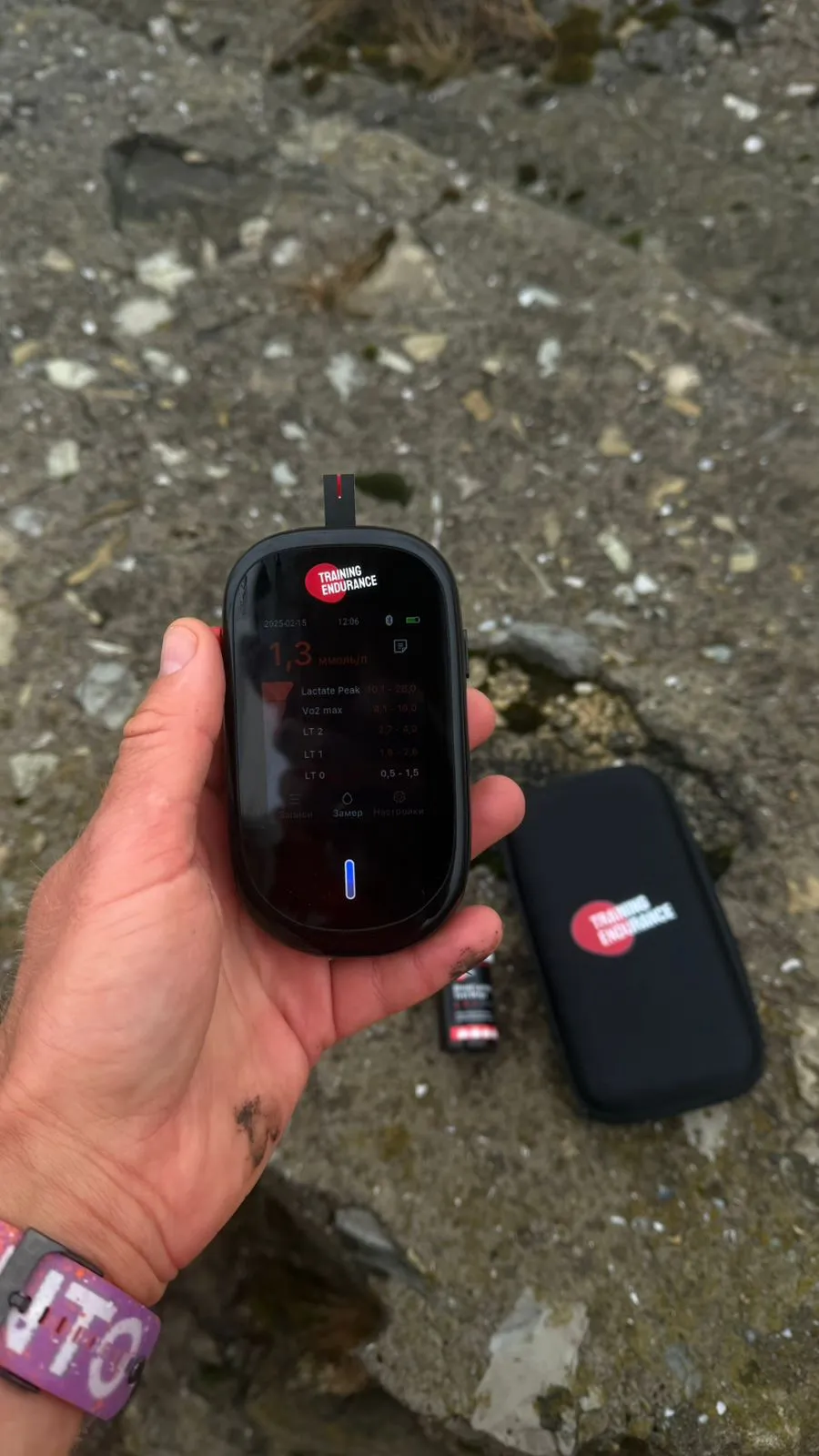
Why measure lactate
There are many reasons athletes and coaches are interested in measuring lactate levels. Let’s look at a few examples.
Lactate: a marker of glycolytic activity
We’ve learned that lactate is always the end product of glycolysis (also known as the anaerobic energy system). So the rate of lactate production tells you something about how active the anaerobic energy system is.
Lactate: a marker of fatigue
We’ve learned that lactate does not cause fatigue. However, blood lactate concentration is a good marker of fatigue. For example, when an athlete shows a steady rise in lactate concentration, you can be sure that he or she is going to tire.
Since fatigue markers such as heart rate aren’t always accurate — especially as the load increases — lactate directly reflects how hard you’re working right now, which energy system you’re using, and, accordingly, which training goals you’re addressing.
Lactate: a marker of carbohydrate use
Finally, since all carbohydrates "pass through" the anaerobic energy system, knowing the rate of lactate production also tells you something about carbohydrate use. So it’s no surprise that the lactate production curve resembles the carbohydrate-burning curve.
Exercise intensity and blood lactate levels
Blood lactate concentration changes depending on exercise intensity. At higher exercise intensities, you’ll ultimately end up with higher blood lactate values.
Exercise duration and blood lactate levels
Blood lactate concentration can also change over time — even when exercise intensity stays the same. Imagine, for example, an athlete running 10 km. The running pace will stay roughly the same. However, the lactate concentration at the finish will be higher than the lactate concentration in the middle of the race.
In other words: lactate concentration rises even if pace stays constant. There’s a term for this — the rate of lactate accumulation — and the lower this number is for you, the better.
Lactate concentration depends on both time and intensity. Each person responds to these two factors differently. So if you want to learn how you respond to load, it may make sense to use different durations and different exercise intensities in your lactate testing protocol.
What to consider in lactate testing
Now that we have the results of a blood lactate test, what do we do with them? First, we need to fully understand what we’re looking at. As we briefly mentioned earlier, we have to remember that measuring blood lactate is a practical alternative to what we actually want to measure: lactate production in the muscles.
Also: blood lactate concentration is the result of lactate formation and its "burning off." We’ve learned that the glycolytic (anaerobic) energy system produces lactate. We’ve also learned that the aerobic energy system uses that lactate as an energy source.
There are average values for defining lactate thresholds, but they can vary slightly for each of you. In our training approach, we use 6 training zones built entirely on the energy-supply model. In upcoming articles, we’ll cover the zones and training models related to lactate.